Hydraulic machinery plays an important role in Brisbane’s construction, transport, manufacturing, agriculture and materials-handling industries. Excavators, forklifts, tipper trucks and industrial machines depend on hydraulic cylinders to lift loads, extend attachments and perform controlled movements.
When these cylinders begin leaking or lose their ability to hold pressure, equipment performance can suffer. Hydraulic Ram Resealing is one way to address worn or damaged seals and restore the cylinder’s operating efficiency without automatically replacing the complete component. Timely Hydraulic Ram Resealing can also help reduce fluid loss and maintain consistent equipment operation when worn seals are the cause of the problem.
Hydraulic ram seals prevent fluid from escaping and help maintain the pressure required for controlled movement. Over time, friction, contamination, heat, side loading and ordinary wear can affect their condition. Even a small leak may indicate that a cylinder needs closer inspection, particularly when the machine struggles under load or operates less smoothly than usual.
Understanding how resealing works helps equipment owners make informed maintenance decisions. It also explains why timely repairs can support productivity, reduce unnecessary fluid loss and improve the reliability of machinery operating across Brisbane.
What Is Hydraulic Ram Resealing?
A hydraulic ram, commonly called a hydraulic cylinder, converts pressurised fluid into linear movement. Its main components include the cylinder barrel, piston, piston rod, seals, wear rings and end fittings. The seals help contain hydraulic oil within the appropriate pressure chambers while limiting contamination entering the system.
Hydraulic Ram Resealing involves dismantling a cylinder as required, inspecting its components, removing unsuitable seals and installing correctly specified replacements. The technician then checks the relevant surfaces and reassembles the cylinder before conducting appropriate testing.
Resealing is not simply a matter of replacing a rubber ring. Seal selection depends on factors such as operating pressure, fluid compatibility, temperature, cylinder design and the movement of the rod. The condition of the piston rod and barrel also matters because damaged surfaces can quickly wear out new seals.
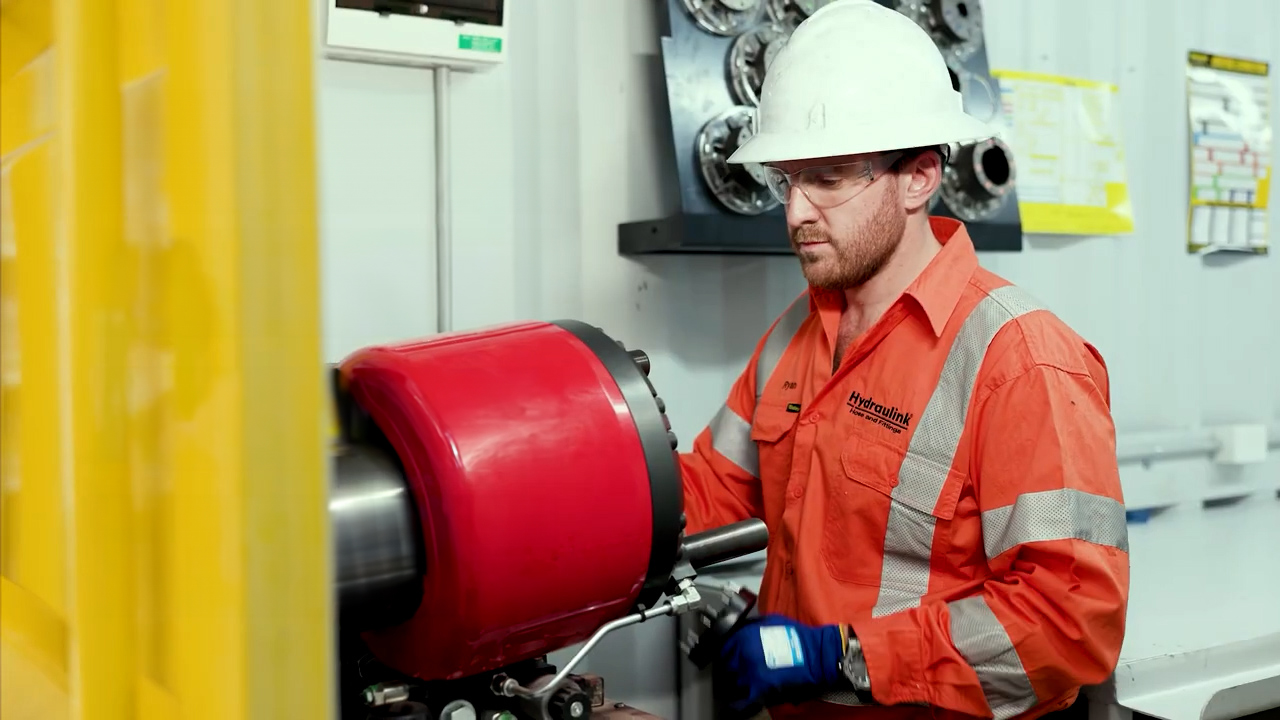
At its Eagle Farm workshop, Hydraulink Brisbane North provides hydraulic cylinder repairs and resealing for different equipment types. This gives local operators an option to investigate a cylinder fault before committing to a complete replacement.
How Hydraulic Ram Resealing Improves Equipment Performance
1. Restores Hydraulic Pressure and Operating Efficiency
Hydraulic cylinders rely on pressure differences to generate force. When a seal wears, oil may bypass the piston or escape from the cylinder. This internal or external leakage can prevent the equipment from achieving its expected performance.
For example, an excavator boom may lift more slowly than usual, while a forklift mast may struggle to maintain a consistent position. The symptoms can vary according to the cylinder design and the severity of the seal damage.
Hydraulic Ram Resealing can restore the cylinder’s ability to contain fluid when worn seals are the main cause of the problem. Once leakage is controlled, the cylinder may deliver more consistent movement and respond more predictably to operator controls.
However, resealing cannot correct every pressure-related fault. A damaged pump, faulty control valve or incorrect system setting may also cause poor performance. Proper diagnosis helps identify whether the cylinder is responsible.
2. Reduces Hydraulic Oil Leakage
External oil leakage is one of the clearest signs that a cylinder may require attention. Oil around the rod, gland or cylinder connections can indicate seal wear, damaged components or another fault that needs investigation.
Hydraulic oil loss creates several practical problems. Operators may need to top up fluid more frequently, contaminated surfaces can become slippery, and escaping oil may reach nearby components. Leakage can also make it harder to identify the source of a separate hydraulic fault.
Hydraulic Ram Resealing addresses seal-related leakage by replacing worn components with suitable parts. The technician should also inspect the rod surface and sealing area to determine whether damage could cause another leak.
A cylinder that is resealed correctly should not be assumed to be permanently leak-free. Operating conditions, installation quality and ongoing maintenance all influence how long the replacement seals remain serviceable.
3. Improves Movement and Load Control
Hydraulic equipment must move in a controlled manner to perform its intended work. Worn seals can contribute to inconsistent extension, slow retraction, drifting or difficulty maintaining a load position, depending on the cylinder and the fault.
On a construction site, inconsistent cylinder movement may affect digging and lifting tasks. In a warehouse, unreliable mast movement can disrupt materials handling. On a tipper truck, a hydraulic fault can affect the raising or lowering mechanism.
Hydraulic Ram Resealing can improve movement consistency when seal failure is contributing to the problem. It may also help restore the cylinder’s ability to maintain pressure within its designed operating conditions.
Nevertheless, unexpected movement or load drift should never be treated as a minor inconvenience. These symptoms can have several causes and may create serious hazards. Equipment should be assessed by a competent technician before returning to normal operation.
4. Helps Extend Cylinder Service Life
A cylinder does not necessarily need complete replacement whenever a seal fails. If the barrel, piston rod and other critical components remain within acceptable condition, Hydraulic Ram Resealing may provide a practical repair option by replacing worn seals.
Hydraulic Ram Resealing can also reveal problems that are not obvious during a routine external inspection. A technician may find corrosion, scoring, worn guide components or contamination that has affected the sealing surfaces.
Addressing these issues early can help prevent repeated failures. However, fitting new seals into a cylinder with badly damaged surfaces may offer only a short-term improvement. The repair decision should consider the overall condition of the component, not just the cost of a seal kit.
Signs Your Equipment May Need Hydraulic Ram Resealing
Equipment operators should pay attention to changes in cylinder performance rather than waiting for a complete breakdown. Common warning signs include:
- Visible oil around the rod: Persistent leakage near the gland or rod seal may indicate wear or surface damage.
- Slow cylinder movement: Extension or retraction may become slower when the cylinder cannot maintain the required pressure.
- Load drift: A cylinder may struggle to maintain its position, although valve leakage and other faults can produce similar symptoms.
- Unusual operating behaviour: Jerky movement, inconsistent response or reduced lifting ability may indicate a hydraulic problem.
- Repeated fluid top-ups: Ongoing oil loss warrants investigation rather than repeated replenishment alone.
- Recurring seal failures: Repeated leaks may point to rod damage, contamination, misalignment or an unsuitable seal specification.
These symptoms do not automatically confirm seal failure. Hydraulic cylinder repairs should begin with an appropriate inspection and diagnosis so that the underlying cause is identified.
Hydraulic Ram Resealing Compared With Other Repair Options
Choosing between resealing, broader cylinder repairs and full replacement depends on the condition of the component and the cost of returning it to reliable service. The following table outlines the main differences.
| Repair option | When it may be suitable | Main benefit | Important consideration |
| Hydraulic ram resealing | Seals are worn and other components remain serviceable | Can restore sealing without replacing the whole cylinder | Damaged sealing surfaces must be addressed |
| Hydraulic cylinder repairs | The cylinder has faults beyond its seals | Allows several defects to be assessed and repaired | Scope depends on component condition |
| Hydraulic ram seal replacement | A specific seal has failed and the fault has been confirmed | Targets the identified sealing problem | Other worn seals may also require attention |
| Complete cylinder replacement | Damage is extensive or repair is uneconomical | Provides a replacement component suited to the application | Usually involves a higher component cost |
| Preventative cylinder servicing | Inspections or scheduled maintenance identify developing issues | Helps detect wear before a major failure | Requires a suitable maintenance schedule |
The most economical choice is not always the option with the lowest initial price. Labour, parts availability, expected service life, equipment downtime and the consequences of another failure should all be considered.
For some cylinders, resealing is a sensible repair. For others, extensive scoring, corrosion, bent rods or structural damage may make additional repairs or replacement necessary.
Why Professional Hydraulic Ram Resealing Matters
Hydraulic cylinders operate under pressure and can store energy even after machinery has stopped. Incorrect disassembly, unsuitable replacement seals or inadequate testing can create further equipment problems and expose workers to serious hazards.
Workplace Health and Safety Queensland’s government publication, hydraulics safety guidance, explains the risks associated with hydraulic equipment, including unexpected movement and crushing injuries. It highlights the importance of safe work procedures, suitable support and competent workers.
Professional Hydraulic Ram Resealing should involve an assessment of the cylinder’s condition, selection of compatible replacement seals and checks appropriate to the equipment manufacturer’s requirements. Testing should confirm that the repaired cylinder operates as intended before it returns to service.
Technicians should also consider whether contamination, incorrect installation, excessive side loading or another mechanical issue contributed to the failure. Without addressing the cause, replacement seals may wear prematurely.
Operators should never attempt to locate a high-pressure hydraulic leak with their hands. Fine jets of hydraulic fluid can penetrate skin and cause serious injuries. Suspected faults should be handled by trained personnel using appropriate safety procedures.
How Hydraulic Ram Maintenance Prevents Repeat Failures
Resealing restores a cylinder only to the extent that the underlying defects have been corrected. Regular hydraulic ram maintenance helps protect the repair and identify developing issues elsewhere in the system after Hydraulic Ram Resealing.
Maintenance intervals should follow the equipment manufacturer’s recommendations and reflect the machine’s workload, operating environment and service history. Equipment exposed to dust, moisture, vibration or frequent heavy loading may need closer attention.
Useful maintenance practices include checking for external leaks, monitoring changes in operating speed, maintaining suitable fluid cleanliness and investigating repeated seal failures. Hydraulic equipment maintenance should also include attention to hoses, fittings, valves and other components that influence system performance.
Hydraulic cylinder servicing is most effective when inspection findings are recorded and recurring faults are reviewed. If the same cylinder repeatedly develops leaks after Hydraulic Ram Resealing, the maintenance team should investigate the reason instead of treating every incident as an isolated seal failure.
Conclusion
Hydraulic Ram Resealing can make a meaningful difference to equipment performance when worn or damaged seals are responsible for oil leakage, inconsistent movement or reduced pressure retention. By restoring the cylinder’s sealing function, a suitable repair may improve operating consistency, reduce fluid loss and extend the useful life of serviceable components.
The key is to identify the underlying fault before choosing a repair. Damaged rods, worn barrels, contamination and other hydraulic problems may require additional work, so inspection and appropriate testing remain essential.
For businesses operating construction, transport, industrial or materials-handling equipment in Brisbane, timely cylinder repairs can help manage maintenance costs and avoid preventable downtime. If your machinery is showing signs of cylinder leakage or unreliable movement, contact Hydraulink Brisbane North today to discuss your requirements.
Frequently Asked Questions
1. What is hydraulic ram resealing?
Hydraulic ram resealing involves removing worn or damaged cylinder seals and fitting suitable replacements. The cylinder is inspected and reassembled to help restore fluid containment and normal operation.
2. How do I know if my hydraulic ram needs resealing?
Common warning signs include oil leaking around the rod, reduced lifting performance, slow movement and difficulty maintaining a position. A technician should inspect the cylinder to confirm the cause.
3. Can a hydraulic cylinder be resealed instead of replaced?
Yes, when the cylinder’s main components remain serviceable, resealing may be a practical alternative to complete replacement. Extensive rod, barrel or structural damage may require additional repairs or a replacement cylinder.
4. How long does hydraulic ram resealing take?
The timeframe depends on cylinder size, damage, parts availability and testing requirements. Straightforward repairs may take less time than cylinders requiring machining or additional component repairs. A technician can provide a more accurate estimate after inspection.
5. How can I prevent hydraulic seal failure?
Follow the manufacturer’s maintenance schedule, keep hydraulic fluid clean, investigate leaks promptly and check for rod damage or misalignment. Repeated seal failures should be assessed to identify the underlying cause.